Editor score 4.2 / 5
Insight
Determining the Color Palette from the White Base
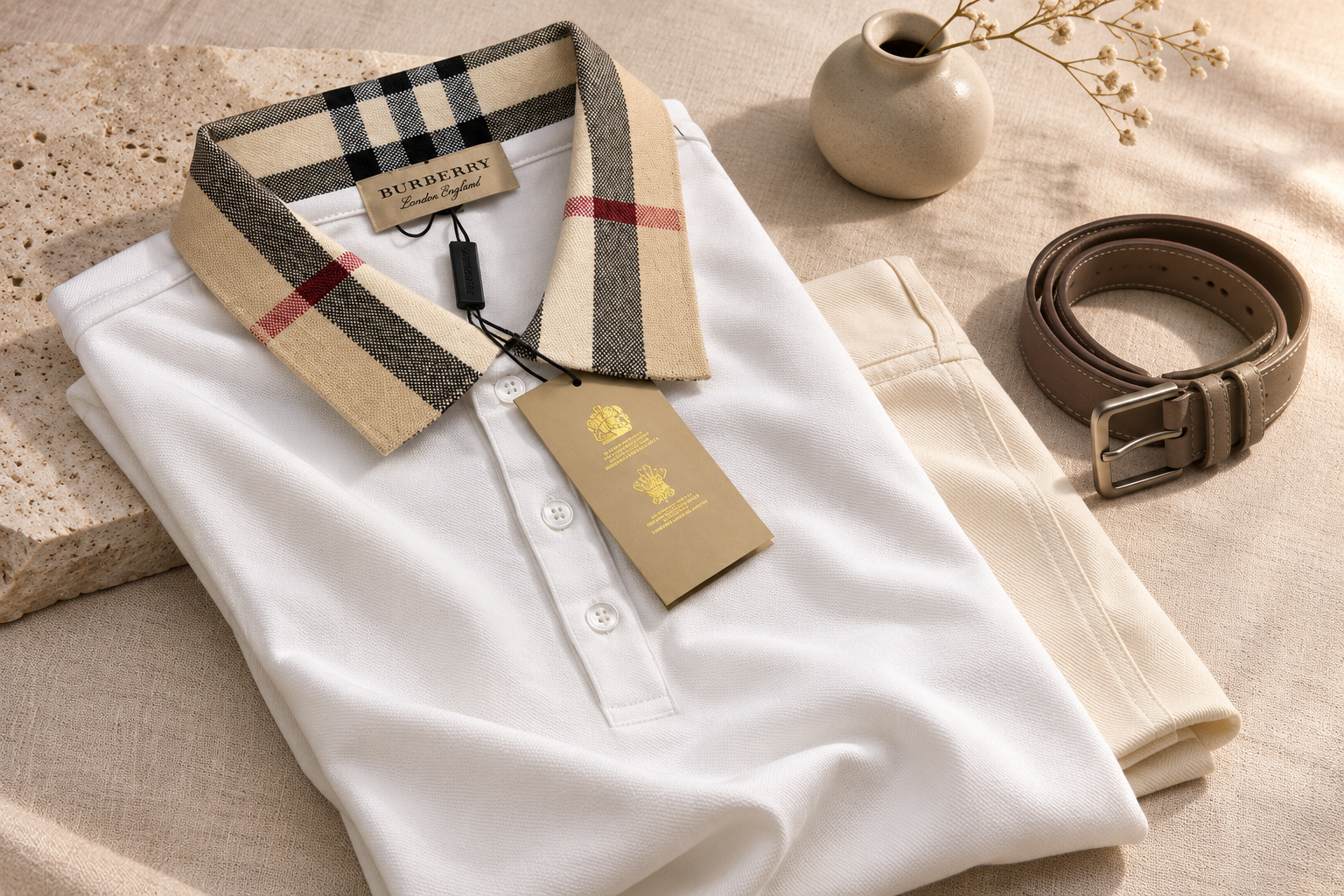
This flat-lay composition centers on a white polo shirt, with the collar featuring a check pattern of beige, black, and red stripes. The white brightens the overall image, beige keeps the pairing soft, black adds definition, and red serves as a small accent, making the collar the most striking detail.

If you want a more cohesive look, you can follow the neutral color combination in the image: pair the white top with beige or cream bottoms, then use brown accessories to carry the warm tones. Black shoes or small accessories can also echo the dark lines in the check, but keep the area small to avoid diminishing the lightness of the white top.
The Collar as the Focal Point
When laying flat, it's recommended to keep the check collar fully spread and smooth the edges slightly. In the image, the collar edge is relatively stiff, with the beige base and black-red stripes clearly visible, so it's best to position the shirt at the center or slightly left of the composition, allowing the eye to land on the collar first, then move to the front placket.
The front placket can remain naturally flat, with three white buttons and corresponding stitching creating a subtle vertical rhythm. The button color is close to the body, so it won't compete with the check collar for attention, making it suitable for a clean, light background.
Styling Bottoms and Accessories
Beige trousers work well with this top because they continue the warm base of the collar while avoiding too many colors in the look. For flat-lay, you can let part of the trousers peek out from one side of the shirt for depth, but don't cover the placket and collar.
A brown belt can bridge the beige trousers with the black and red details in the check. For everyday wear, keep accessories to one or two pieces, such as a brown belt with a simple watch, or understated brown shoes. This preserves a preppy feel without making the outfit look overly decorated.
Step-by-Step Flat-Lay Arrangement
- Start with a light base fabric, using a low-contrast background such as off-white, light gray, or light brown.
- Place the white polo in the main position, smooth the edges, and keep natural wrinkles but avoid large folds.
- Spread the check collar to fully show the black-red lines and beige base.
- Place beige trousers at the back or side, exposing only part of the fabric and hem for layering.
- Position a brown belt near the trousers as a color transition.
- Let the hangtag fall naturally on the shirt, while avoiding covering the main collar and button details.
In the image, the white fabric is mostly smooth, but wrinkles are visible at the folds. For showcasing garment details, you can keep a few natural creases to add texture; for a cleaner display, smooth the shirt first before arranging the hangtag and accessories.
Styling Directions to Explore
This color scheme can be extended in three directions. The first is a light casual look, focusing on the white polo, beige trousers, and light shoes for a bright and soft overall effect. The second is a vintage preppy style, keeping the check collar and adding a brown belt, dark loafers, or a structured jacket. The third is understated smart-casual, limiting red to the collar stripes and pairing with beige, brown, and dark gray pieces to keep the visual focus on the upper body.
This image clearly shows the front collar, placket buttons, hangtag, and part of the shirt body; however, it cannot provide information on the full silhouette, back details, actual sizing, fabric composition, fit, comfort, durability, or logo authenticity.