Editor score 4.2 / 5
Insight
Overall Color Palette
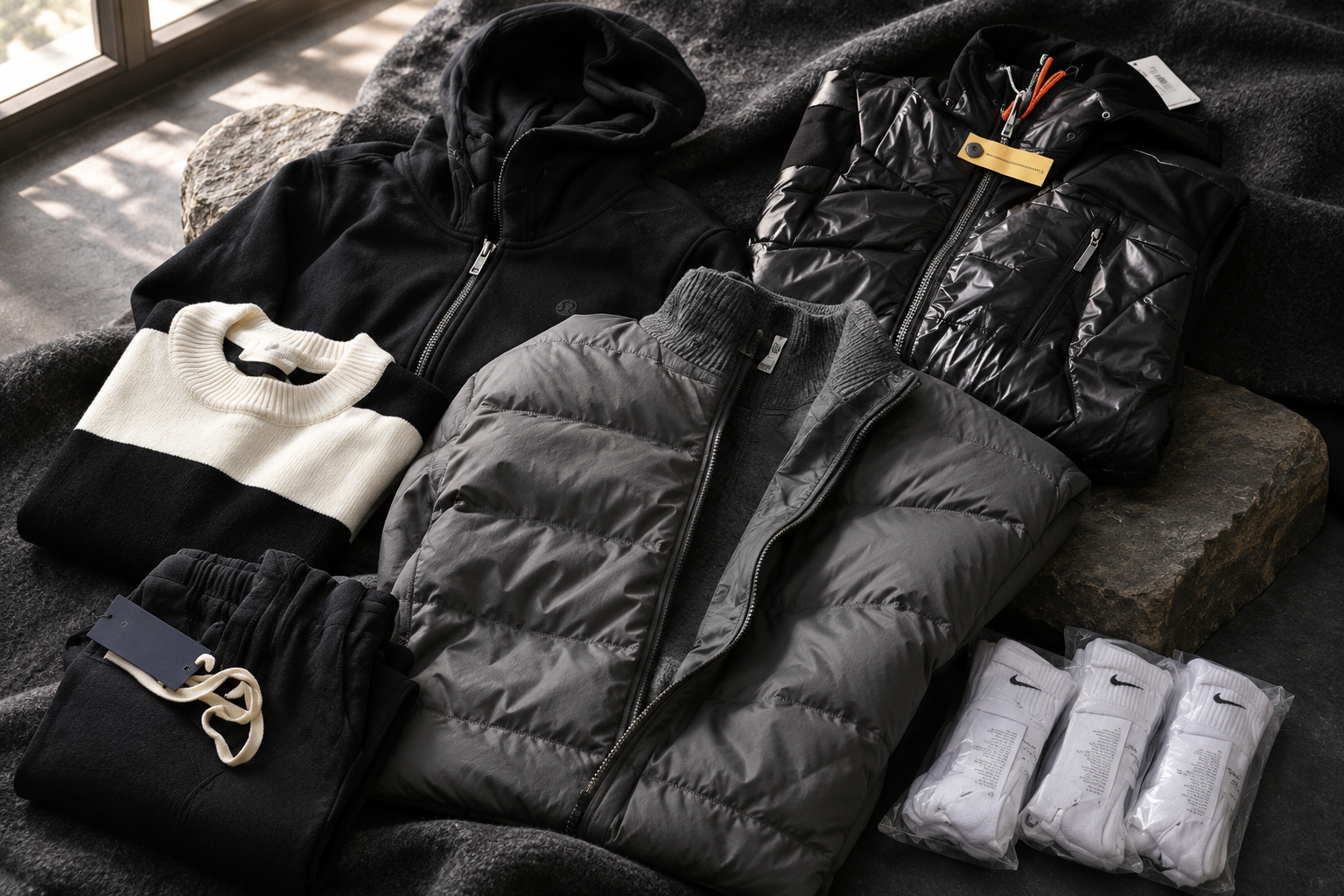
This set of winter clothing centers on black, gray, and white, presenting a low-saturation, easy-to-coordinate winter color scheme. Black provides the main visual weight, gray down pieces are used to create layers, and white knit stripes and sock packaging offer highlights, preventing the overall look from feeling too dull.

If you prefer a safer outfit, you can pair a black outer layer with a gray mid-layer, then brighten it up with a white inner layer or accessories. When the proportion of black and gray is high, white should not be used in large scattered areas; keeping it at the collar, socks, or small accessory spots will make the overall look more harmonious.
How to Arrange Layers
The clothing in the image includes a hooded jacket, down jacket, down vest, and a spliced jacket with knit sleeves, suitable for combining as "base layer, mid layer, and outer layer":
- For the base layer, choose a black-and-white horizontal striped knit top to break up the monotony of solid-colored clothing.
- The mid layer can use gray or dark gray pieces to connect the light-colored inner layer with the black outer layer.
- The outer layer is best as a black jacket with a stand collar, hood, or zipper design to enhance the silhouette.
- A down vest can reveal the inner sleeves and hem, creating a contrast between a sleeveless outer layer and long-sleeved inner layer.
- White socks can serve as a brightening element near the shoe opening, echoing the light-colored areas of the knit top.
The horizontal quilting lines on down pieces are quite prominent. When styling, you can use a striped knit top to create visual rhythm in different directions. If the outer layer already has many quilting and pocket details, the inner layer should be simple in pattern and clear in color blocks.
Three Color Coordination Ideas
Black-Dominant
Use a black hooded jacket or black down jacket as the main visual, paired with dark gray pants and black shoes, then add white socks or a light-colored inner layer for a small bright area. This combination has a clear silhouette, suitable for a minimalist everyday style.
Gray-Balanced
Make a gray down vest the core, with a black knit or dark long-sleeve inner layer, and add black accessories on the outer layer. Gray can reduce the heaviness of an all-black outfit while retaining the composed feel needed for winter.
Black-and-White Contrast
Choose a black-and-white horizontal striped knit top as the visual center, with a solid black jacket or vest over it. Keep the striped area clear and avoid adding large complex patterns; pants and shoes can remain black, making the black-and-white contrast on the upper body the focal point.
Flat-Lay Styling Tips
This layout works well with the "central piece plus peripheral accessories" approach. Place a larger down vest or jacket in the center, with the hooded jacket and knit top distributed on both sides, and small items like socks at the edges to create a visual hierarchy of different sizes.
When arranging, pay attention to the following:
- For large clothing items, first determine the direction, keeping zippers, collars, and pockets visible.
- Avoid piling similar colors together; insert gray or white areas between black pieces.
- Stagger sleeves, hems, and hoods appropriately to avoid overlapping silhouettes.
- Group packaged small items together to keep the layout neat and create edge framing.
- For striped knit tops, preserve the collar, stripe divisions, and ribbed details to facilitate observing how they pair with solid-colored outerwear.
What to Focus on When Selecting and Styling
From the image, you can directly see the clothing's color, outer silhouette, zippers, pockets, hood, stand collar, ribbed areas, and horizontal quilting details. As for fabric composition, actual thickness, filling, inner structure, size fit, wearing silhouette, and durability, these cannot be determined from this single overall flat-lay image. When planning similar outfits, prioritize the actual garment measurements, layering space, and specific product specifications, rather than selecting sizes or judging warmth based solely on visual thickness.
Overall, the advantage of a black, gray, and white palette is its wide range of combinations: black provides stability, gray provides transition, white provides brightness, and stripes add rhythm. As long as you control the bright areas and stagger the collars, cuffs, and quilting lines of different pieces, you can maintain both the layered feel of winter styling and the neatness of the flat-lay display.