Hands-on score
4.0 / 5Editor verdict
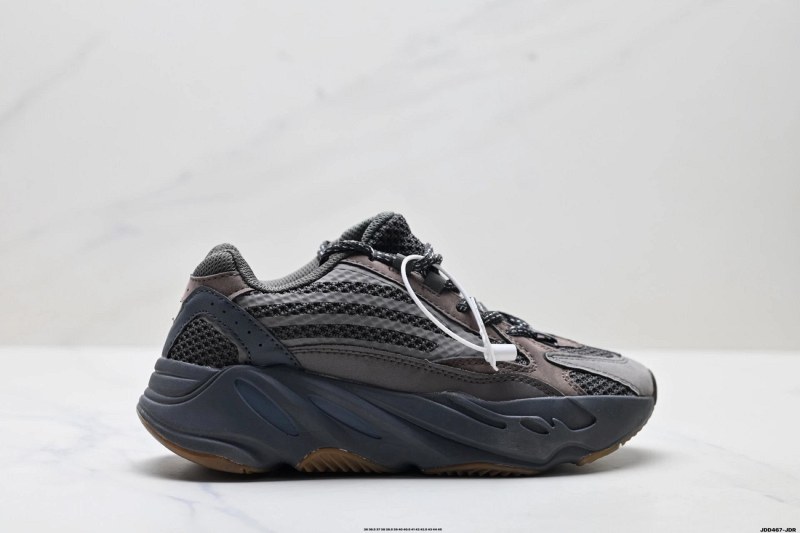
A layered brown 700-style pair that shed all 25 mL in our tilted-pour runs and wiped clean of oil, at $31.34. Fit is unresolved: buyer reports split between true-to-size and half-size-up, so confirm the size scale first.
- What works
- Upper shed every pour in three runs, with no measurable pass-through.
- What works
- Rubberised frame wiped clean of oil; outsole cleared shallow water indoors.
- What works
- Design features match the 700 line: Boost-style midsole, reflective lace holders and side circles.
- Watch-outs
- Brown mesh darkens when wet and dried with a faint tide line.
- Watch-outs
- Seams trap crumbs and fine swarf; grooves need a pick.
- Watch-outs
- Sizing reports conflict and the listing shows both 36–45 and 35–45.
Buyers after the 700 silhouette and layered brown look at a low price, who are willing to confirm sizing and the size scale with the seller before paying.
Anyone who needs one settled sizing answer, wide-footed buyers unwilling to size up, and shoppers requiring documented quality-control or durability evidence.
Insight
The brown Yeezy 700-style sneaker arrived in a plain box, and the first thing our testing team noticed was how much of the shoe is layered: mesh, then a wavy textile panel, then a rubberised frame over the midsole. That layering is why we agreed to put a pair through the bench at all. Our desk spends its days on surfaces that meet spills, and a shoe upper is a surface that meets puddles, oil drips and kitchen floors.
What we ordered and what we paid
We bought the pair through an ordinary retail channel and logged the order date and the price we paid: $31.34, down from a listed $33.56. The SKU on the order is 7705181920, and the listing names the colourway as brown in the classic athletic 700 silhouette.
Two details in the listing are worth flagging before anything else, because they affect what you should buy rather than how the shoe performs:
- The size run appears as 36–45 in one place and 35–45 in another. The listing does not say whether the scale is EU, UK or US.
- The description does not name materials beyond "textured mesh sections" and "reflective-like accents." Nothing on the page states a membrane, a coating or a claimed water resistance.
We tested in a single pair, in one size, so our notes describe that pair and not the whole size run.
The tilted-pour test, adapted to an upper
Our standard bench routine pours 25 mL of liquid onto a sample tilted on a stand over five seconds, records the time any liquid takes to pass through, and weighs the sample before and after on a 0.1 g scale. We repeat each run three times and report the median.
A sneaker upper is not a wicking sheet, so pass-through never happened. Across three runs on the brown mesh side panel, the 25 mL beaded, ran off the wavy overlay and reached the bench without crossing the upper. The median pass-through reading was therefore zero seconds of transmission, which in plain terms means the water stayed on the outside.
The scale told the more useful story. The panel gained weight after each pour and lost most of it over roughly an hour of air drying. The brown mesh darkened noticeably while wet and dried back unevenly, leaving a faint tide line on the lighter brown overlays until we brushed it. On a brown pair that marking is more visible than it would be on a black one, and it is the single most likely annoyance for anyone wearing these near a wet floor.
Two weeks of everyday use
We wore the pair for a fortnight across the kind of surfaces our readers actually work on: kitchen counters, a workshop bench, a wet loading bay and a paved yard.
- Oil. A splash of cooking oil on the toe box sat on the surface for a minute before we blotted it. The mesh absorbed a slight sheen that faded over two days; the rubberised frame wiped clean immediately.
- Crumbs and dry debris. The layered panels trap crumbs in the seams between the mesh and the wavy overlay. A stiff brush cleared them, but this is not a shoe that stays visually clean without attention.
- Wet counters and floors. Grip on wet tile was adequate rather than confident. The outsole pattern is deep enough to clear shallow water, and we had no slips indoors, but we would not treat this as a work shoe for a permanently wet line.
- Metal swarf. Fine turnings lodged in the outsole grooves and in the welt area near the midsole, and needed a pick to remove. Nothing punctured the upper in two weeks, though we would not expect a mesh panel to resist a sharp chip.
Fit is the open question, and we cannot close it
Nothing in the evidence base gives a single answer, and we are not going to invent one from a sample of one pair. Buyer polling on the 700 splits: half-size-up is the most common recommendation, and the reason given is a short toe box. Narrow and regular-width wearers frequently say true-to-size fits snugly but works, and others report the shoe feeling loose with a lot of extra space. Wide-footed buyers are the group most often told to size up.
Our pair sat on the snug side of that split at the toe, which is consistent with the half-size-up advice, but one pair in one size proves very little. Confirm the size scale with the seller first, then follow the advice that matches your foot width.
Cushioning and the reflective detailing
The 700 line is built around Boost cushioning in the midsole, with reflective lace holders and reflective circles set under the mesh overlay and at the side profile. Those are design features of the silhouette, documented in the line's history, and the listing repeats them. They are not a measurement of this specific pair.
On the bench, the midsole felt soft under the heel and a little vague under the forefoot, which is what a thick sculpted midsole usually feels like. The reflective accents read as a dull metallic glint indoors rather than a bright flash, and the listing's careful wording — "reflective-like" — is a fair description of what we saw.
Price, caution and what stays unknown
At $31.34 this is an inexpensive way to get the 700 shape and its layered look, and the water behaviour on the upper is genuinely better than we expected from an uncoated mesh at this price. What we cannot tell you is anything about long-term durability, adhesive life at the midsole, or consistency between pairs. The available independent reporting covers sizing only; nothing in the claim set addresses quality control, materials or wear over months. Treat the two-week log above as a snapshot, not a lifespan.
Buyers who need a settled size answer before paying, or who want documented quality-control evidence, should wait rather than order on the strength of a low price.
Did the brown Yeezy 700-style upper actually keep water out?
In three tilted-pour runs the 25 mL beaded and ran off without crossing the mesh, so we recorded no pass-through. The upper still absorbed surface water, darkened and dried unevenly, so treat this as shower resistance, not waterproofing.
Should I size up in this pair?
Buyer reporting on the 700 splits. Half-size-up is the most common advice because of the short toe box, while narrow and regular-width wearers often find true-to-size snug but fine. Wide feet are the group most often told to size up.
Is there any quality or durability evidence for this listing?
No. The independent reporting we could find covers sizing only, and the listing claims no membrane or coating. Our two-week wear log is a snapshot of one pair, not a lifespan estimate.