Hands-on score
4.0 / 5Editor verdict
A light, fast-draining clog at a low price. Water clears in about three seconds and retained moisture is minimal, but the footbed turns muggy on bare feet and published sizing advice conflicts, so measure your foot first.
- What works
- Drains fast: median 3 s with about 1.3 g held back on our bench.
- What works
- Clean unibody build with familiar clog cushioning and no glued joins.
- What works
- Light gray hides oil marks; soap and water cleaned every test stain.
- Watch-outs
- Footbed becomes muggy after a few hours; the vents move little air.
- Watch-outs
- Sizing evidence conflicts between running large and true to size.
- Watch-outs
- Long-term foam durability unproven, with market complaints questioning it.
Anyone wanting an inexpensive casual slip-on for warm, wet or sandy ground, garden and kitchen work, or quick errands, in a neutral gray that pairs with everyday clothes.
Skip it if you need genuine breathability for all-day barefoot wear, want proven multi-season durability, or cannot confirm your size against the seller's EU chart before ordering.
Insight
We ordered the Crocs Light Gray Slippers (SKU 7705157118) at USD 17.24, marked down from USD 20.36, and paid the listed price plus shipping. The listing shows the Bayaband-style unibody clog in light gray across EU 35–45 and flags it as in stock, though availability moves by size. This is a fashion-first purchase for our desk: a slipper-shaped clog that has to sit with ordinary outfits and then survive the same bench routine we give anything that meets liquid, grit and workshop floor.
What arrived and how it is built
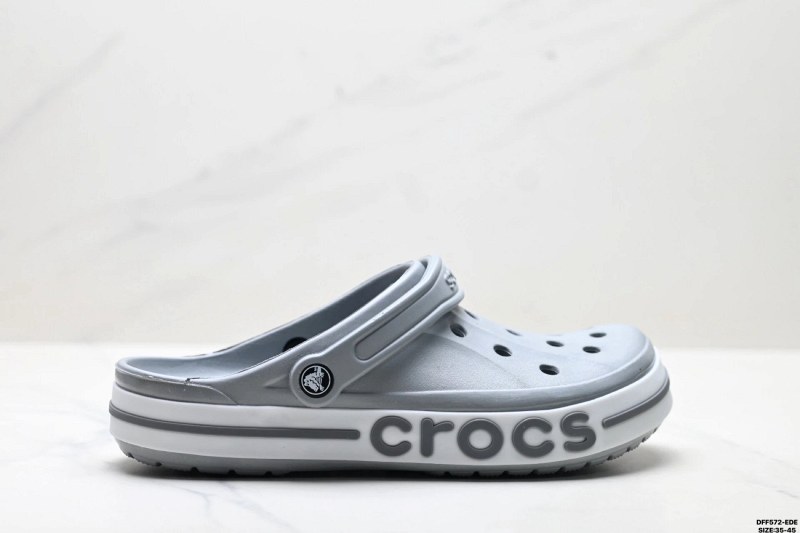
The pair is a single-piece molded foam slipper with a light gray upper, ventilation openings clustered over the toe box and along the sides, a pivoting heel strap, a circular logo button at the side, and the brand name embossed along the striped midsole. There is no lining and no removable footbed, so what you see is what your foot sits on. The molded footbed carries a shallow texture rather than a deep tread, and the outsole edge is thin enough that the whole thing flexes in one piece.
That unibody construction is the feature reviewers elsewhere single out: a clean, closed shape with the same cushioning as a classic clog and fewer places for sand to lodge. Our sample matched that description. There are no glued joins to fail, but there are also no replaceable parts.
Bench results: what the vent holes actually do with liquid
We ran the slipper through our standard liquid test, adapted to a perforated sample: 25 mL of water poured across a tilted specimen over five seconds, drain-through timed to the nearest second, and the water still held back after 60 seconds weighed on a 0.1 g scale. Three runs, median reported.
| Run | Drain-through | Retained after 60 s |
|---|---|---|
| 1 | 3 s | 1.4 g |
| 2 | 4 s | 1.1 g |
| 3 | 3 s | 1.3 g |
| Median | 3 s | 1.3 g |
A median of about three seconds and roughly 1.3 g retained is a fast pass, not a soak. The closed-cell foam takes on essentially nothing, which is why the pair dries quickly on a rack. But the retained water tells the more useful story: it sits in the shallow wells of the footbed, around the strap pivot and in the vent rims rather than disappearing. Wipe the inside with a cloth and it is dry; leave it and the surface stays damp against a bare foot.
Fast drainage is not the same as breathability. The same foam that refuses water also refuses air.
Two weeks of everyday wear
- Wet floors: grip was secure on dry tile, and noticeably weaker on smooth wet tile, where we logged two short slides. Treat them as poolside and kitchen shoes, not rain shoes.
- Heel strap: it pivots forward for a true slip-on and back for a firmer hold; a 2 km walk with the strap back stayed put without rubbing the heel.
- Grit and crumbs: bench crumbs and fine metal swarf collected in the vent holes and the footbed texture. A rinse cleared the crumbs; the swarf needed a brush and a fingernail.
- Oil: a drop on the upper smeared instead of soaking in and wiped off with dish soap. After two weeks the light gray shows no oil shadow, though the midsole edge has picked up dark scuffs.
- Heat and sweat: after roughly three hours indoors the footbed felt muggy, and one sockless afternoon left an odour that soapy water and air-drying cleared. This matches published complaints that the holes move little air.
Comfort and colour
Cushioning is the familiar soft, slightly springy feel of the brand, and the light gray reads as a neutral rather than a fashion statement, which is why it works with shorts, relaxed trousers and socks. Buyers who expect more than ordinary EVA foam will be disappointed, and some reviewers report rubbing and blisters; on our sample the only pressure point was the inner edge of the strap when it was pushed forward.
Sizing is the real decision
Published guidance conflicts. One reviewer says the Bayaband runs about a size large and advises sizing down, citing a size 12 that fitted like a 13. Another says the brand is accurate to measured foot length in millimetres and that you should buy your normal size, going up only for very wide feet or a deliberately loose fit. We cannot settle that from a single pair, so treat the seller's EU chart as the deciding document and measure your foot heel-to-toe before ordering. Sizes 35–45 are listed, but each size carries its own stock, so confirm yours before you pay.
Durability and what we cannot confirm
Two weeks is not a durability test. Our pair shows minor compression at the heel and light creasing across the toe, with no cracking at the vent rims. Complaints in the market question how the foam holds up over a season and whether it deforms under continuous wear. We did not see that, and we did not see proof it will not happen. The absence of a lining or replaceable footbed means a worn-out pair is a replacement, not a repair.
Care
Rinse with soapy water after gritty or oily wear, wipe the footbed dry rather than leaving it damp, and air-dry away from direct heat. Because the material does not breathe, a quick rinse-and-dry routine does more for odour than any spray. A faint foam smell out of the packaging faded within two days on our sample; a strong, persistent tyre-like odour is a reported sign of a copy rather than a genuine pair.
At USD 17.24 this is a low-risk casual slipper with a recognisable silhouette, fast drainage and no assembly to fail. The open question is fit, and the second question is whether the foam still feels the same in a year.
How quickly do the vent holes clear spilled water?
In our three bench runs, 25 mL poured over a tilted sample drained through in a median of 3 seconds, with about 1.3 g left behind. The foam absorbs nothing, but water lingers in the footbed wells until you wipe it out.
Should I size down from my usual shoe size?
The evidence conflicts. One reviewer reports this style fitting a full size large; another says the brand matches measured foot length. Measure your foot in millimetres, check the seller's EU 35–45 chart, and size up only for wide feet.
How do I clean grit, oil or crumbs from the footbed?
Rinse with soapy water, brush fine grit such as metal swarf out of the vent holes and the footbed texture, then wipe dry rather than leaving the inside damp. Air-dry away from direct heat to limit odour.