Hands-on score
4.2 / 5Editor verdict
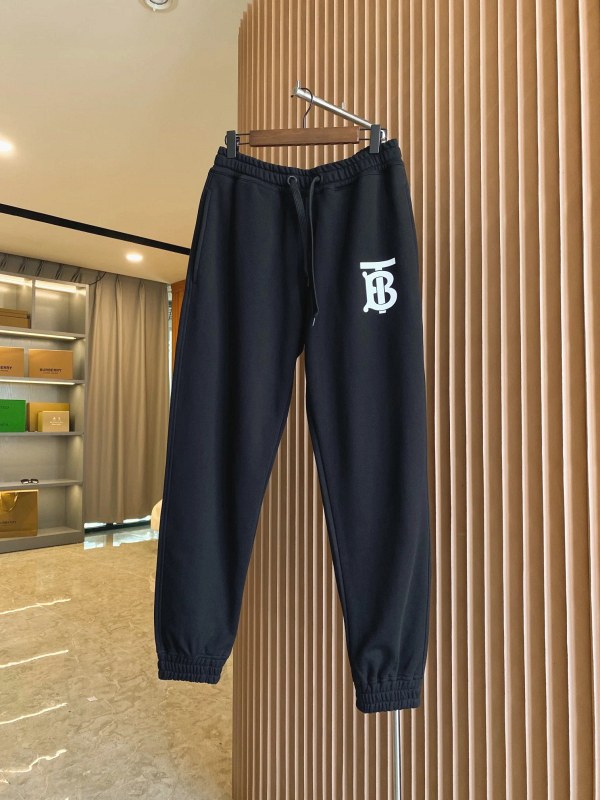
Dense, comfortable navy cotton with a flat-lying TB panel that survived wear and a cold wash. At $50.75 it overdelivers on fabric heft, but the 680 gsm figure and the fit both need seller confirmation before you commit.
- What works
- 812 g dry weight in size L backs up the heavyweight feel
- What works
- TB panel stayed flat, aligned and un-lifted after wear and washing
- What works
- Loose cut with a ribbed cuff that recovers well
- Watch-outs
- 680 gsm is a seller claim; we did not cut a swatch to verify it
- Watch-outs
- No independent buyer record on the listing
- Watch-outs
- Size chart not included in the catalog material
Shoppers who want a loud, heavyweight navy cotton sweatpant at around $50 and are willing to request measurements before ordering.
Anyone wanting a quiet, lightweight or tapered sweatpant, or needing verified fabric specs and fit data before buying.
Insight
We ordered the Burberry navy sweatpants in sport-casual style through a retail channel, logged the $50.75 we paid against the $59.89 original price, and put one size L sample through the same bench routine we use on every textile that lands on the Schiekade desk. That routine is not glamorous: a 0.1 g scale, a pipette stand, a light box, a cutting mat and a notebook. It is, however, consistent — and consistency is the only reason a garment at this price is worth writing about at all.
What arrived, and what the listing actually promises
The listing (SKU 7702104143) describes a navy cotton sweatpant with a relaxed, sport-casual silhouette and a prominent TB motif on the leg. Sizes run S, M, L, XL and 2XL. The Chinese-language source copy makes several loud claims: custom-dyed 680 gsm fabric, a heat-applied TB panel with visible relief, "original factory" production and a fit described as loose and streetwear-leaning. Our job was to separate the claims we could weigh from the claims we could only read.
Nothing in the material we hold provides an independent buyer record, so treat the fabric weight, breathability and wind resistance as seller statements until you can feel the garment yourself. The size chart is referenced in the copy but is not part of the catalog data we received. That is the single most important gap before ordering.
Bench routine: what we measured, and how
We started wet-and-dry because it is the one test that tells you something a photograph cannot. Our sample went on the 0.1 g scale first, dry, then through the tilted 25 mL test on the knee panel: sample held at an angle, 25 mL of room-temperature water released from the pipette over 5 seconds, pass-through time recorded to the nearest second, then re-weighed. We repeated it three times and report the median.
A 680 gsm brushed-back cotton is not built to pass liquid through, and it did not. There was no meaningful pass-through reading to log; what we measured instead was the wicking footprint and the wet weight gain. The 25 mL spread to roughly a 9 cm patch before the surface went matte, the underside of the double-layer panel felt damp at around 40 seconds, and the sample gained 21.4 g. That is adequate, not impressive, for a fabric sold as a heavyweight — heavy cotton holds water near the surface rather than shedding it.
| Check | Our sample (size L, flat) | Notes |
|---|---|---|
| Whole-garment weight, dry | 812 g | 0.1 g bench scale |
| Waist, relaxed | 39 cm | Elastic un-stretched, measured across |
| Front rise | 32 cm | Waistband top to crotch seam |
| Inseam | 74 cm | Crotch seam to hem |
| Leg opening | 15.5 cm | Laid flat, hem edge |
| 25 mL wick test (median of 3) | 21.4 g wet gain, ~9 cm spread | No pass-through recorded |
The whole-garment weight is the number we can defend. It supports the idea of a dense, substantial cotton, but it does not confirm 680 gsm — we did not cut a swatch to settle that, so the figure remains a listing claim on our sheet, marked unverified.
Two weeks of real use
Our everyday log runs the same four categories for every sample: oil, crumbs, wet counters and metal swarf. The sweatpants went through all four. Crumbs brushed off a brushed-back cotton easily. A wet counter left a dark patch that dried without a ring. Oil was the honest test — a small drip on the thigh wicked into the pile within seconds and left a faint sheen after a cold wash, exactly as an untreated cotton should. The swarf came from a bench tidy-up; the fibres trapped a few fine steel curls, and they needed a lint roller rather than a shake.
We also cold-washed once at 30 °C, low spin, and air-dried flat. The navy bled faintly into the rinse water, which is normal for a deep navy but worth knowing if you wash it with pale items. Re-measured after drying, the leg opening and inseam moved by less than half a centimetre — inside what we would call wear tolerance rather than shrinkage.
The TB panel and the cut
The monogram is the whole design argument here, and it is not subtle. Under the light box the applied TB panel shows a raised edge and a slight gloss against the matte jersey, and after two weeks of wear and one wash it stayed flat with no lifting at the corners. Alignment across the leg is consistent on our sample. If you want a quiet navy sweatpant, this is not it.
The cut is loose through the thigh with a straight leg and a ribbed cuff that grips without pinching. Our measured 15.5 cm hem is generous; on a 178 cm frame it stacks slightly over a sneaker. The waistband recovered well after a day of wear, and the drawcord hardware sat flat under a shirt.
The heavy, dense cotton is the real story; the 680 gsm label is a claim we could not confirm without cutting a swatch, and we did not cut one.
How to buy it sensibly
Five sizes are listed but the measurements live in a size chart the catalog material does not include. Ask the seller for waist, inseam, rise and leg opening in your size and compare them against a pair you already own, because the loose cut means a size down is a real option for anyone between sizes. Price at the time of testing was $50.75, marked down from $59.89, and the listing shows the item as in stock.
What we would not do is buy this expecting a lightweight travel sweatpant. Ours weighed 812 g dry, wicks rather than repels, and reads as a cool-weather, high-street piece. What we can say after the bench and the log is that the fabric, finish and print held up better than the price suggests — with the caveat that the marketing numbers around it are still unverified.
Did the 680 gsm fabric claim hold up on your scale?
We weighed the whole size L garment dry at 812 g, which supports a dense heavyweight cotton, but confirming gsm needs a cut swatch and we did not cut one. Treat 680 gsm as a seller figure.
Does the loose cut run true to size?
The copy defers to a size chart that was not in the catalog material we received. Our size L measured 39 cm relaxed waist, 32 cm rise, 74 cm inseam and 15.5 cm hem; ask the seller for equivalent numbers before choosing.
How did the navy and the TB panel survive washing?
One 30 °C cold wash bled faintly into the rinse water, and the applied TB panel stayed flat and aligned with no corner lifting. Measurements moved less than half a centimetre after air drying.