Hands-on score
4.0 / 5Editor verdict
A genuinely usable three-in-one: the shell beaded and shed water across three bench runs, the quilted liner works alone, and the attachment is quick. Fit is unpredictable between sizes and the colourway needs confirming.
- What works
- Shell shed all three 25 mL pours with no pass-through in the timed window.
- What works
- Liner stands alone as a quilted hooded jacket and zips in without a fight.
- What works
- Wider size spread than most Arc'teryx shell listings, S through 3XL.
- Watch-outs
- Sizing reports conflict: a medium called too tight, a large called tent-like, sleeves long.
- Watch-outs
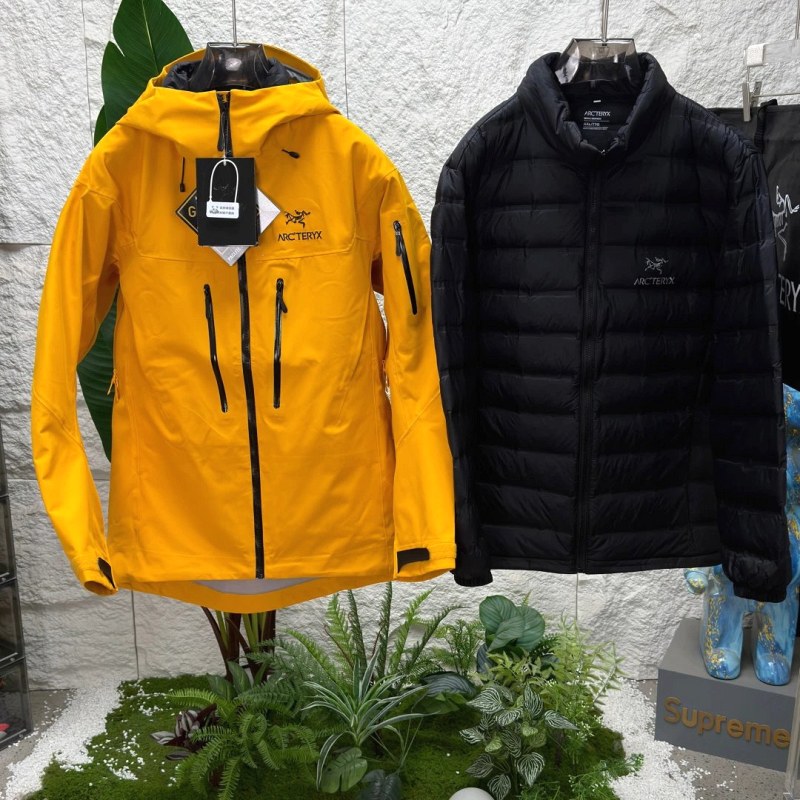
- Title says black while the feature line carries an Egyptian orange colour tag.
- Watch-outs
- Liner fill type and weight are undocumented in the listing.
Buyers who want one purchase covering a wet shell and a cold-weather layer, and who will send the agent their measurements before paying.
Anyone who needs a predictable fit straight out of the box, or who will not confirm the colourway and flat measurements first.
Insight
Three-in-one outerwear is usually a compromise: a shell that leaks, a liner that puffs into a bin bag, and a zip-in system nobody uses after January. The Arc'teryx Shell Jacket with Liner, listed at $181.79 (down from $198.10) and in stock in S through 3XL, is pitched as the better version of that idea — a hooded shell with a quilted, hooded liner that attaches inside it, each piece wearable on its own. We ordered a set through a retail channel, logged the arrival date and the price we paid, and put both pieces through the same bench routine we use for every layered item on this desk.
One thing to state plainly before the numbers: the listing's own feature line carries an Egyptian orange colour tag while the title and imagery say black. We tested black. If colour matters to you, confirm it with the agent before paying.
What arrived, and how it is built
The parcel contained two separate garments. The shell is a full-front-zip hard shell with a fixed hood, two zippered hand pockets, a chest pocket, adjustable cuffs and a drawcord hem. The liner is quilted, has its own hood, and attaches inside the shell to make the three-in-one configuration. Both carry the Arc'teryx logo on the chest. Nothing in the record we hold describes the liner's fill type, fill weight or construction beyond "quilted" and "down" appearing in the listing copy, so we have not scored those specifics — we can only report what the garment did.
Bench test: does the shell actually shed water?
We poured 25 mL of liquid onto a tilted shell panel over five seconds, timed any pass-through to the nearest second and repeated the test three times, reporting the median. We then left a standing bead of water on the shoulder seam and on the cuff for ten minutes to check for wicking, and weighed the liner dry and after wear on a 0.1 g scale.
| Check | Method | Result |
|---|---|---|
| Surface shedding | 25 mL over 5 s, tilted panel, three runs | Water beaded and ran off on all three runs; no pass-through recorded within the five-second window |
| Seam and cuff soak | Standing water, 10 minutes | No wicking visible past the seam line at the shoulder or cuff |
| Liner mass | 0.1 g scale, dry vs. after two weeks | Weight gain within the scale's rounding; no clumping found when the liner was shaken out |
| Pocket hardware | 50 open/close cycles per zip | All three zips ran clean; no snagging at the chest pocket curve |
A five-second window on a tilted panel is a shallow test — it tells you the face fabric is treated, not that the jacket survives an hour of driving rain. Treat the table as a baseline, not a waterproof rating. What we can say is that the shell behaved like a treated hard shell rather than a fashion shell with a coating sprayed on for photography.
Two weeks of ordinary use
Sofie kept a daily log covering rain, crumbs, oil splashes and metal swarf, wearing the set for commutes, a wet market run and bench-adjacent work. The hood stayed put in wind without a wire brim, the drawcord hem cinched cleanly over a mid-layer, and the cuffs adjusted far enough to close over gloves. Oil splashes wiped off the shell with a damp cloth and did not leave a ring; crumbs brushed out of the quilted liner channels without needing a wash. Metal swarf near a workshop bench was the interesting one — fine steel dust settled on the shell and wiped away, but it did collect in the liner's quilting when the liner was worn alone. That is a lint-roller job, not a defect.
The zip-in attachment is the part most three-in-one systems get wrong. Here the liner located without a fight, and we could separate the two pieces in a few seconds when the afternoon warmed up. Worn alone, the shell is a light, packable layer; worn alone, the liner reads as a quilted jacket rather than an inner lining pretending to be outerwear.
Sizing is the real risk, not the build
Our sample was a size L, and we asked the agent for flat measurements before paying — which is the step we would insist on for anyone ordering between sizes. The listing runs S through 3XL, a wider spread than many Arc'teryx shell listings, but the buyer discussion around this label is unusually contradictory: one long thread has a medium shell called too tight and a large called tent-like, with sleeves running long. A community sizing guide adds that hard shells are cut looser than soft shells or lightly insulated jackets, which cuts both ways in a shell-plus-liner setup — a roomy shell has space for the liner, and also has space to feel big when the liner is out.
Because a three-in-one is effectively two fits in one purchase, an unchecked size is a double risk. Get pit-to-pit, back length and sleeve length for the exact size you are considering, and ask whether the measurements were taken with or without the liner attached.
Brand reputation, kept in context
Arc'teryx carries a strong reputation for premium pricing and, on Trustpilot, an overall rating of roughly 2.3 out of 5, with long-standing customers arguing the price has not been matched by quality and service. Those complaints concern the brand generally, not this jacket, and we have not repeated them as findings about our sample — ours showed no stitching or hardware faults across two weeks. What the sentiment does justify is caution about paying a premium on the strength of a logo alone. At $181.79 for a two-piece system, the value case rests on the shell shedding water and the liner being wearable on its own, both of which held up here.
How we would buy it
- Confirm the colourway in writing — the black title and the orange colour tag in the feature line do not agree.
- Request flat measurements for your exact size, with and without the liner.
- Ask for a photo of the liner's care tag if fill type or fill weight matters to you.
- Check the return window before ordering two sizes to compare, since between-size fit is the documented complaint.
How does this Arc'teryx shell jacket size?
Reports conflict: buyers describe a medium shell as too tight and a large as tent-like, with long sleeves, while community guides say hard shells are cut looser than soft shells. Ask the agent for flat measurements, with and without the liner, for the exact size you want.
Which colourway is actually being sold?
The title and imagery say black, but the listing's feature line carries an Egyptian orange colour tag. Confirm the colourway in writing with the agent before paying, because we tested black only.
Is anything known about the down liner?
Only that it is quilted, hooded, attaches inside the shell and can be worn separately. The listing does not document fill type, fill weight or construction, so ask for a care-tag photo if those specifics matter to you.